Colorful Russia Russian Abakan Cheese Production Process (with Cheese Knowledge)
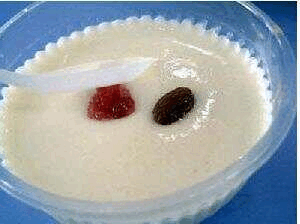
Cheese
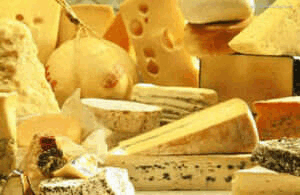
, also known as cheese or ricotta, is a food made by adding enzymes or bacteria to milk after it has been soured. Cheese is typically made from cow's milk, but it can also be made from goat, sheep, or buffalo milk. Bacteria reduce the pH and add a unique flavor. Most cheeses range in color from milky white to golden yellow. Traditional cheese is rich in protein, fat, vitamin A, calcium, and phosphorus. Modern low-fat cheeses made from skim milk are also available. In addition to traditional Western cheeses, there are also cheeses made from various non-lactic acid bacteria in ethnic minorities. 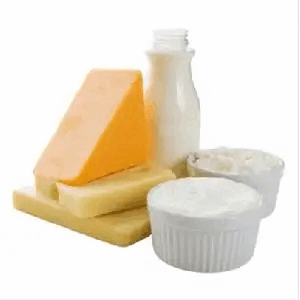
Cheese is called "cheese" in English, "fromage" in French, and "formaggio" in Italian.
Originating in Western Asia, cheese is an ancient delicacy, but its flavor truly began to develop in Europe. By the 3rd century BC, cheesemaking had become quite sophisticated. In fact, cheese was offered to the gods in ancient Greece, where cheesecake originated. In ancient Rome, cheese became a gift of praise and love. The Romans then spread cheesecake from Greece throughout Europe.
In English, "cheesecake" is often used to describe a refreshing pin-up girl.
Ricotta cheese, a fresh cheese, is made up of tiny grains, yet it is smoother than cottage cheese, made from skim curd. Its pure white surface and slightly moist texture give it a light, sweet flavor.
Ricotta cheese is primarily made from the whey drained during the production of mozzarella (a mild white Italian cheese) and provolone (a hard, light-colored, pear-shaped cheese, often smoked). Technically, this type of ricotta isn't actually cheese, as it's made from a byproduct of cheese production.
In the United States, ricotta is typically made from a combination of whey and skim milk, sometimes just skim milk. Because it's made from the whey drained from cheese, people sometimes refer to it as "recooked." Ricotta cheese is a popular dish alongside other dishes like macaroni with tomato sauce, lasagna (topped with minced meat and tomato sauce), cheesecake, and cassata gelato.
Cheese - Food Culture:
Cheese originates from Western Asia and is a delicacy passed down from ancient times. However, its flavor truly began to develop in Europe. By the 3rd century BC, cheesemaking had reached considerable sophistication. In fact, cheese was offered to the gods in ancient Greece, and cheesecake originated there. During the Roman era, cheese became a gift of praise and love. The Romans then spread cheesecake from Greece throughout Europe.
Anecdote:
In October 1992, when Xisi Snack Alley opened, 87-year-old Hu Xiqing attended the opening ceremony. She drank two bowls of cheese and remarked, "I haven't had it in over 30 years, and it still tastes just as good." When one of China's leaders, Tian Jiyun, visited Xisi Snack Hutong, he kindly said to me, "You are father and son. This is our culinary tradition. We must not lose it, we must not lose it!" I was so overwhelmed with emotion at that moment. A Chinese American offered me a $2,500 monthly salary to come to the US, but I didn't go, so as not to lose the tradition of Beijing snacks.
Cheese
is also a traditional food of nomadic peoples in northwest China, such as the Mongolians and Kazakhs. In Inner Mongolia, it's called milk tofu, in Xinjiang, it's commonly known as milk cake. Completely dried cheese is also called milk lumps.
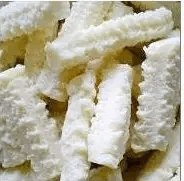 Dairy products are the best choice for calcium supplementation, and cheese is the dairy product with the highest calcium content, and this calcium is easily absorbed. In terms of calcium content, 250 ml of milk = 200 ml of yogurt = 40 grams of cheese. Cheese can enhance the body's resistance to disease, boost metabolism and vitality, protect eye health, and maintain healthy skin. The lactic acid bacteria and their metabolites in cheese have certain health benefits for the human body, helping to maintain the stability and balance of normal intestinal flora and prevent constipation and diarrhea. Cheese is high in fat and calories, but relatively low in cholesterol, which is beneficial for cardiovascular health. British dentists believe that eating some cheese with meals can help prevent tooth decay. Eating foods containing cheese significantly increases the calcium content of the tooth surface, thereby inhibiting the development of tooth decay.
Cheese - Suitable for Everyone
: Cheese is suitable for everyone. It is one of the best calcium-rich foods for pregnant women, the elderly, and children experiencing rapid growth and development. Excessive cheese consumption can be difficult to digest and is not suitable for those with weak stomachs, but it is suitable for those with weak constitutions because it is rich in protein, calcium, fat, and other nutrients. Elderly people are advised not to eat cheese. Cheese is a highly nutritious extract from milk, so it is high in fat. While low-fat options are available, they are concentrated and can be detrimental to the digestive system of the elderly.
Cheese - Appropriate Amount:
Cheese - Friendly Tip:
It is best not to eat fruit salad with pizza, as the calcium in the cheese combines with substances like fruit acids, hindering absorption. Cheese is high in calories, and eating too much can lead to weight gain. People taking monoamine oxidase inhibitors should avoid eating cheese.
The most common theory about the origin of cheese is that it was invented by nomadic peoples. They originally stored fresh milk in cowhide backpacks, but the milk would ferment and turn sour after a few days. Later, they discovered that sour milk, exposed to cool, humid climates, would solidify over a few days, turning into delicious cheese. This method of preserving milk became popular, and cheese has long been a staple food for these nomadic peoples.
 Although cheese is relatively durable, it is actually constantly fermenting, so it will spoil over time. Although this change is slow, it will eventually become inedible.
Today, there are an increasing variety of cheeses and ways to enjoy them. Besides being used in Western dishes, cheese can be cut into small pieces and eaten plain with red wine, added to steamed buns, bread, crackers, hamburgers, or mixed with salads and noodles. With increasing international exchanges, more and more young people are becoming more aware of the nutritional value of cheese. Perhaps you've tried a McDonald's cheeseburger or a Pizza Hut pizza. Cheese is a key ingredient in these delicious dishes.
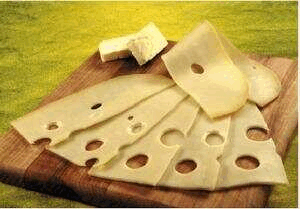
Currently, cheese on the market primarily comes in slices, such as Bright Dairy Whole Milk, which is manufactured in Australia using high-quality fresh milk from Bright Dairy, a renowned domestic dairy manufacturer. It's perfect for students and office workers on a rush in the morning. A slice of cheese sandwiched between two slices of bread makes a simple yet nutritious breakfast.
Cheese is a highly nutritious dairy product. Each kilogram of cheese is made from 10 kilograms of concentrated milk, making it more nutritious than cow's milk. Similarly, cheese is more nutritious than yogurt, another fermented dairy product. The following comparison will illustrate this point.
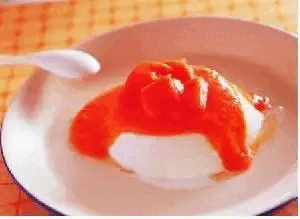 Papaya stewed cheese, a beauty product, is made by directly coagulating milk without undergoing a ripening process and removing some of the water. It has a soft, moist texture, a refreshing milky aroma, and a lightly tart flavor, making it very refreshing. However, its shelf life is short, so it should be consumed promptly.
B. White mold cheese: The rind is covered with white fungal hairs. The mold and fungi can remain on the rind when eaten, or they can be removed to suit your taste. It has a very soft texture and a rich, milky flavor. This cheese is generally not used in cooking.
C. Blue cheese: Penicillin creates blue-green marbled patterns. Compared to white mold cheese, it has a more intense and pungent flavor.
D. Washed soft cheese: During the maturation period, it needs to be frequently washed with salt water or local wine. The rind is orange-red, the interior is soft, and the taste is mellow and rich in aroma.
E. Hard unripened cheese: During the manufacturing process, it is strongly pressed and some water is removed. It has a mild and smooth taste and is easily accepted by the general public. Because it is easy to dissolve, it is often used in a large number of dishes.
F. Hard ripened cheese: It is pressed and boiled during production. It has a hard texture and a sweet and intriguing aroma. It can be transported and stored for a long time.
G. Goat cheese: The most classic goat cheese is made according to the same method as fresh cheese and can be eaten fresh or after draining. It is small in size, diverse in shape, and has a slightly sour taste.
H. Melted cheese: It is made by melting one or more extruded cheese balls and adding milk, cream, or butter. Different products can have different ingredients added, such as vanilla, nuts, etc. The flavor is not strong and can be stored for a long time.
English translations of some cheeses:
1. Cream cheese, an unripened, full-fat cheese that can be processed to a fat content exceeding 50%, has a fine texture and a mild flavor.
2. Brie cheese, one of France's most famous cheeses, is named after the Brie region in the Centre department. It comes in many varieties, generally pale white to yellowish in color, with a soft, salty texture and a rich, milky flavor. It is round, disc-shaped, 18-35 cm in diameter, weighs 1.5-2 kg, and has a milk fat content of 45%. Brie cheese was first produced in the 17th century and was dubbed the "King of Cheese" in 1918, achieving worldwide fame. Brie cheese is best preserved by placing a clean piece of cardboard on the cut side (to prevent the cheese from flowing) and storing it in a cool, dark place or in the refrigerator.
3. Mozzarella cheese, a mild cheese produced in the Naples region of Campania, Italy, is made from buffalo milk. It has a pale yellow color, weighs 0.5-1 kg, and has a milk fat content of 50%. This cheese is a key ingredient in pizza. 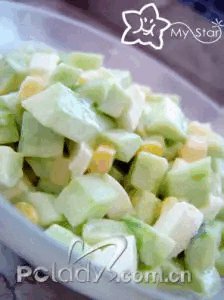 Happy Breakfast Cucumber Cheese
. Cheddar cheese, a hard, whole-milk cheese from Cheddar in Somerset, England, has a long history. It is white or golden in color, fine-textured, and mild in flavor. It weighs 30-35 kg and contains 45% butterfat.
Parmesan cheese, an Italian hard cheese, is aged and dried for many years. It has a pale yellow color and a strong, fruity flavor. Supermarkets typically sell it in powdered form in boxes or cans. Parmesan cheese has a wide range of uses. It can be grated into crumbs and used as a condiment for pasta, soups, and other dishes, and it can also be made into exquisite desserts. Italians often enjoy large blocks of Parmesan cheese with figs and pears, or break it into small pieces and serve it as an appetizer with wine. Because it matures longer, it is more easily digested than other cheeses, making it one of the world's finest cheeses.
6. Mascarpone cheese: Strictly speaking, it's just clotted cream, not cheese. It's not made with a rennet culture or a fermented bacterial strain. It originated in the 17th century in Lombardy, northern Italy, during the Spanish rule of that time. Mas quebueno, meaning "better than good" in Spanish, is pronounced mahs-car-PO-nay. It's often used in the traditional Italian pastry, tiramisu.
Nutritional Comparison of Cheese, Yogurt, and Milk (All figures are based on 100 grams) .
Cheese - Nutritional Information 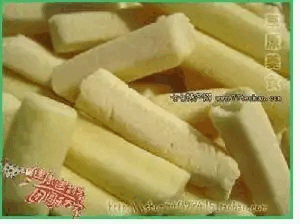

 . Cheese is divided into raw and mature cheeses.
To make raw cheese, fresh milk is poured into a cylinder, stirred to extract the cream, and then placed in a hot place to ferment. Once the milk has soured, it's poured into a pot and boiled. When the yogurt takes on a curd-like consistency, it's scooped into cheesecloth and squeezed to remove the water. The curds are then placed in a mold or wooden tray and either pressed into shape or cut into cubes. The raw cheese is now ready. Most people carry a few blocks of cheese in their bags, just in case, to satisfy hunger and thirst.
The preparation of cooked cheese differs slightly from that of raw cheese. To make cooked cheese, the remaining milk from the rind, or from the cream, is left to ferment for a few days. Once the yogurt has solidified into a soft mass, the excess water is filtered through cheesecloth. The mixture is then slowly boiled in a pot, stirring constantly. Once it becomes a paste, it is scooped into cheesecloth and squeezed to remove the water. The remaining curd is then placed in a mold or wooden tray and either pressed into shape or cut into various shapes. Once the cheese is made, it is left in the sun or in a well-ventilated area to harden and dry.
There are many ways to enjoy cheese, whether soaking it in milk tea or chewing it slowly like dry food. The more you chew, the more you savor its flavor. Orange Cheesecake Ingredients: 7 digestive biscuits, 220g soft cheese (cream cheese), 50g sugar, 50g cake flour, 20g tartar sauce, 1 egg (beaten), 220g fresh cheese, 100g low-sugar citrus jam. Additional ingredients: butter and cake flour to taste.
Instructions:
1. Preheat oven to 170°C. Evenly spread the butter mixture on a pie plate, then sprinkle evenly with wheat flour. Line the pie plate with baking paper.
2. Crush the digestive biscuits with a dough stick and sprinkle evenly on the pie plate.
3. Stir the soft cheese until combined. Add sugar, cake flour, dry tortellini, and eggs, mix well, then add 70g of citrus jam and mix until combined. Mango Mousse Cake: This cake doesn't require fermented eggs, making it easier to make. Give it a try. Ingredients: 1 sponge cake (1.5cm or 2cm thin),
100g mango puree, 100g
cream cheese, 50g
granulated sugar,
3
egg yolks, 3 gelatin sheets (I didn't have any, so I used 8g gelatin powder),
puree of 1/2 lemon,
1 teaspoon juice of a lemon, 200g heavy cream, 2 teaspoons
kosher wine. Instructions : 1. Place the cake puree in a pan. (It's best to coat the cake with kosher wine to maintain a soft texture.) 2. Whisk the cream and set aside. (The bowl will not fall out even if you turn it upside down.) 3. Combine the softened cream cheese and granulated sugar, then add the egg yolks. (The cheese should be completely softened, free of lumps, and in a paste-like consistency.) 3. Dissolve the gelatin sheets in hot water. (Similarly, dissolve the gelatin powder in hot water. Keep it liquid; it will quickly solidify.) 4. Add mango puree, rum (brandy is also acceptable), lemon puree, lemon juice, cream, and the gelatin solution. Mix well, then pour into the cake pan. Refrigerate. (It is best to refrigerate overnight) Mixed Strawberry Cream Cheesecake Recipe Ingredients: Cream cheese (Bijia) - 50g White sugar - 20g Egg yolk - 13g Fish gelatin - 5g Love brand non-dairy sweet cream - 150g Refrigerated mixed strawberries - 125g Preparation method: Soften the cream cheese with a blender, then mix the egg yolks and white sugar together until they become a thick paste, mix into the cream cheese and mix together, add the soaked and dissolved fish gelatin water, mix and add Love brand fresh cream and mixed strawberries. 4. Pour the batter into the pie plate and sprinkle the remaining jam on the surface.
5. Bake at 170°C for 40-50 minutes. Cheesecake Series - Cheese Muffins Ingredients: 50g cream cheese, 50g butter, 60g sugar, 80g yogurt, 140g cake flour, 1/4 tsp. BP, 1 egg, candied red beans or raisins to taste. Instructions: 1. Beat cheese, butter, and sugar until combined. 2. Add egg, mix well, and sift in flour. 3. Add yogurt, mix well, and stir in candied red beans or raisins. Transfer to baking cups or pans. 4. Preheat oven to 180°C and bake for about 30 minutes, or until golden brown. The flavor is smooth and delicious, not too greasy.
Cheesecake - The key step in the production process
is to use milk that has been pasteurized at 63°C, as pasteurized milk cannot be used as raw material. If you are sourcing fresh milk from dairy farmers, in addition to filtering and sterilizing it, you should also inform the supplier in advance not to overfeed the cows the day before milking, as this will reduce the quality of the milk. Additionally, be sure to warn suppliers not to try to add dairy byproducts to milk. You're shrewd enough to easily uncover their tactics.
Harmful microorganisms can often appear in unexpected places during the manufacturing process. They can ruin your cheese during ripening or cause harmful mold growth (this doesn't apply to cheeses made with added mold). Contaminated cheese is inedible, so cheesemaking tools must be disinfected to the best of your ability. Since hands harbor bacteria and cheesemaking involves contact with hot water, it's recommended to wear sterilized rubber gloves.
Don't underestimate temperature control. Many lactic acid bacteria essential for cheesemaking have specific fermentation temperature ranges. For example, thermophilic Streptococcus in cheese is a thermophilic fermentation bacteria. If the milk is heated below the fermentation temperature, insufficient acid production will occur. While some cheeses don't require acidification for curdling and instead require rennet for direct curdling, the right flavor undoubtedly adds a lot of flavor and greatly enriches the cheese variety. However, excessively high temperatures will prolong the curdling time and create a steamed taste.
(1) Check the temperature regularly with a thermometer.
(2) Do not heat the milk directly; heat it in a double boiler. (Large and small pot sets)
This is a tool for measuring the fermentation stage and assessing the effectiveness of lactic acid bacteria.
First, completely dissolve the starter culture in a small amount of preheated milk. Rennet needs to be shaken and dissolved with purified water before use.
The above points are the basic precautions for making cheese. If you have the patience and desire to love this perfect food forever, then prepare it patiently. Don't expect instant success; perseverance is more important. An Italian chef once spent nine years mastering the methods of making three types of cheese. Of course, he didn't have the opportunities you have today, but I don't want you to take that long to learn.
Cheese - Nutritional Analysis:
Cheese is a dairy product made by concentrating and fermenting milk. It essentially removes most of the water from the milk, retaining its highly nutritious essence. It is known as the "gold" of dairy products. Each kilogram of cheese concentrates 10 kilograms of milk's worth of protein, calcium, phosphorus, and other essential nutrients. The unique fermentation process ensures a 96%-98% nutrient absorption rate.
Dairy products are a good source of calcium. Cheese is the best choice for calcium. It's the dairy product with the highest calcium content, and this calcium is easily absorbed. In terms of calcium content, 250 ml of milk = 200 ml of yogurt = 40 grams of cheese.
Cheese can enhance the body's resistance to disease, promote metabolism, enhance vitality, protect eye health, and maintain healthy skin.
The lactic acid bacteria and their metabolites in cheese have certain health benefits for the human body, helping to maintain the stability and balance of normal intestinal flora and preventing constipation and diarrhea.
Cheese is high in fat and calories, but relatively low in cholesterol, which also has beneficial effects on cardiovascular health.
British sleep doctors believe that eating cheese with meals can help prevent tooth decay. Eating foods containing cheese significantly increases the calcium content in the tooth surface, thereby inhibiting the development of tooth decay.
Cheese is suitable for everyone.
Cheese is one of the best calcium supplements for pregnant women, the elderly, and children experiencing rapid growth and development.
Health Traffic Lights:
People taking monoamine oxidase inhibitors should avoid cheese.
Cheese - There are many ways to enjoy cheese 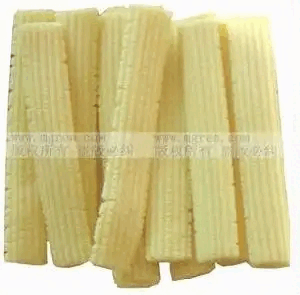
, whether soaking it in milk tea or chewing it slowly like dry food. The more you chew, the more you savor its flavor.
Orange Cheesecake
Ingredients:
7 digestive biscuits,
220g soft cheese (cream cheese)
, 50g sugar,
50g cake
flour, 20g dry liqueur ,
1 egg (beaten)
, 220g fresh cheese
, 100g low- sugar citrus jam.
Additional Ingredients: Butter
to taste, cake flour to taste . Instructions: 1. Preheat oven to 170°C. Evenly spread the butter mixture on a pie plate, then sprinkle evenly with wheat flour. Line the pie plate with parchment paper. 2. Crush the digestive biscuits with a dough stick and sprinkle evenly on the pie plate. 3. Stir together the soft cheese. Add sugar, cake flour, tartar sauce, and eggs, then stir well. Add 70g of citrus jam and mix well. This chocolate cheesecake doesn't require pre-fermented eggs, making it easier to make. You can give it a try. Ingredients: 100g mango puree, 100g cream cheese, 50g granulated sugar, 3 egg yolks, 3 gelatin sheets (I didn't have any, so I used 8g gelatin powder), 1/2 lemon puree, 1 teaspoon juice, 200g heavy cream, 2 teaspoons kosher salt. Instructions: 1. Place the cake pan. (It's best to coat the cake with kosher salt to maintain a soft and fluffy texture.) 2. Whisk the cream until smooth and set aside. (The bowl won't fall out even if you turn it upside down.) 3. Combine the softened cream cheese and granulated sugar, then add the egg yolks. (The cheese should be completely softened, free of lumps, and a paste.) Dissolve the gelatin sheets in hot water. (Add some hot water to dissolve gelatin powder as well, keeping it liquid or it will solidify quickly.) 4. Add mango puree, rum (brandy is also acceptable), lemon puree, lemon juice, cream, and gelatin solution, mix well, then pour into a cake pan. Refrigerate overnight. (It's best to refrigerate overnight.) Strawberry Cream Cheesecake Ingredients: Cream cheese (Bijia) - 50g, Sugar - 20g , Egg yolk - 13g , Gelatin - 5g, Aihu brand non-dairy cream - 150g, Refrigerated assorted strawberries - 125g. Instructions: Soften the cream cheese in a blender. Then, blend the egg yolks and sugar until a thick paste forms. Add the cream cheese and mix well. Add the soaked and dissolved gelatin solution. Once combined, add Aihu brand whipped cream and assorted strawberries. 4. Pour the batter into a pie dish and sprinkle the remaining jam on top. 5. Bake at 170 degrees for 40-50 minutes. Cheesecake series - Cheese muffins Ingredients: 50g cream cheese, 50g butter, 60g sugar, 80g yogurt, 140g low-gluten flour, 1/4tsp BP, 1 egg, candied red beans or raisins as needed. Method: 1. Beat cheese, butter and sugar; 2. Add eggs and mix well, then sift in flour; 3. Add yogurt and mix well, mix in candied red beans or raisins, and put into baking cups or baking molds; 4. Preheat the oven to 180 degrees and bake for about 30 minutes or until the surface is colored. It tastes smooth and delicious, and you won't feel greasy. Cheese - Nutritional Analysis 1. Dairy products are the best choice for calcium supplementation. Cheese is the dairy product with the highest calcium content, and this calcium is easily absorbed; 2. Cheese can enhance the body's ability to resist disease, promote metabolism, enhance vitality, protect eye health and keep skin healthy; 3. Cheese is lactic acid bacteria 4. Cheese and its metabolites have certain health benefits for the human body, helping to maintain the stability and balance of normal intestinal flora and preventing and treating constipation and diarrhea. 5. Cheese is high in fat and energy, but relatively low in cholesterol, which is also beneficial for cardiovascular health. 6. British dentists believe that eating some cheese with meals can help prevent tooth decay. Eating foods containing cheese significantly increases the calcium content of the tooth surface, thereby inhibiting the occurrence of tooth decay. Cheese - Therapeutic Effects: Sweet and sour in taste, neutral in nature; nourishing the lungs, moistening the intestines, nourishing yin, and quenching thirst; treating symptoms such as deficiency-heat, polydipsia, dry bowel movements, dry skin, and itchy rashes . Legendary cheese and nutrition Legend has it that the earliest cheese appeared among nomadic peoples, and it has a history of more than 4,000 years. People originally put fresh milk in cowhide backpacks, but after a few days, the milk would turn sour. Later, people discovered that sour milk would solidify into blocks after a few days in a cool and humid climate, turning into delicious cheese. So the original cheese was coagulated milk, which was made from coagulated milk protein and drained milk. Although cheese comes from milk, it is better than milk. Generally, 10 kilograms of milk concentrate is required for each kilogram of cheese. Compared with other animal proteins is of high quality and large quantity, and it is easier for the human body to absorb through fermentation and decomposition. The absorption rate can be as high as 96-98%. At the same time, during the fermentation process of cheese, a large amount of fat is broken down into unsaturated fatty acids, which can lower the body's cholesterol. Cheese has the highest calcium content of any dairy product and is very easily absorbed, so eating cheese is beneficial for children's bone development and preventing osteoporosis in the elderly. Many people often imagine cheese as a high-fat, greasy food, but this is actually a misconception. Cheese is rich in nutrients. It not only retains all the original nutrients in milk, but also breaks down the original fat in milk through fermentation into other nutrients and easily digestible fine fats. It also concentrates the natural calcium in milk and combines this calcium with protein, making cheese several times more concentrated than milk's essence. This is why cheese has always been known as "milk gold." Cheese - Five reasons for children to eat cheese Healthy children are made with "nutrition", and dietary nutrition is the key to children's growth and development. Cheese is rich in nutrients and balanced, and is recognized as a healthy food in the world. It plays a very significant role in promoting children's growth and development and ensuring their health. The main benefits of eating cheese are reflected in the following five aspects: Rich variety of vitamins to help growth: Cheese is extremely rich in vitamins A, D, E and vitamins B1, B2, B6, B12 and folic acid, which are beneficial to children's growth and development. Comprehensive minerals to strengthen bones: Cheese contains important minerals such as calcium, phosphorus, and magnesium. The calcium content of every 100g of cheese is 690-1300mg, and its calcium-phosphorus ratio is about 1.5~2.0/1. Moreover, most of the calcium is bound to casein, and the absorption rate is very high, which is beneficial to It plays a very important role in the growth and healthy development of children's bones. Osteoporosis, which has always been considered a disease unique to the elderly, actually exists in childhood. Eating more cheese is very helpful in delaying bone loss. High digestibility and easy absorption: the protein in cheese is mainly casein, and the actual digestibility is about 97.5%, which is higher than the 91.9% digestibility of whole milk. A French Bel Giovin cheese also uses an original easy-to-absorb formula to maintain children's intestinal health and further help the absorption of nutritional essences. The 10 best cheeses with reasonable brain power: the fat in cheese is 5.5% to 30.6% of the milk fat content. Milk fat contains a certain amount of linoleic acid and linolenic acid, which are necessary for children's growth and development. Phosphatidylcholine contained in milk fat and sphingomyelin, which are closely related to the intellectual development of infants and young children. It's easy to prepare and enjoy in a variety of ways: "baby cheese" for infants and toddlers aged 1 to 3, growing cheese for children aged 7 to 13, and cheese sticks that can be enjoyed as snacks. Fresh and refreshing cheese sticks with mixed fruit flavors are also available. At home, mothers can cook cheese into porridge or mix it with noodles, fruits, and vegetables. Changing the recipes daily naturally whets children's appetites. Cheese - The World's 10 Best Cheeses. Cheese has a firm texture and rind, and its most distinctive feature is its pores, which are caused by bubbles during the fermentation process. It has a rich fruity aroma and a stimulating taste. It can be used in fondue or paired with a rich red wine, such as Bordeaux's Médoc. Nutritional information: 200 calories, 0.03g carbohydrates, 13g fat, and 7.5g protein per 30g serving. 2. Cheshire cheese is a bit crispy, looks as smooth as silk, smells a bit sour, and is a bit salty if you taste it carefully. It tastes even better if you pair it with tomatoes. Nutritional information: 113 calories, 0.03 grams of carbohydrates, 9.4 grams of fat, and 7.1 grams of protein per 30 grams. 3. Bosworth Leaf cheese, made from goat's milk, has a creamy texture and doesn't taste as pungent as some other cheeses. If you haven't completely adapted to the taste of cheese, you can try Bosworth Leaf cheese first. Nutritional information: 80 calories, 0.27 grams of carbohydrates, 6.3 grams of fat, and 5.6 grams of protein per 30 grams. 4. Stilton cheese The original birthplace of Stilton cheese is in Ireland, England. The eastern counties of England, though, are known for their Stilton cheese, hence the name. Stilton cheese is now protected by British law and can only be produced in three locations: Leicestershire, Nottinghamshire, and Derbyshire. Stilton is one of the world's three major blue cheeses and has a strong flavor. If you don't like tangy cheeses, you might find it hard to understand why some people are crazy about it. Nutritional information: 100 calories, 0.03g carbohydrates, 8.1g fat, 6g protein per 30g serving. 5. Cheddar: Cheddar is one of the world's most popular cheeses. It has a soft texture and ranges in color from white to pale yellow. The flavor varies depending on its age, ranging from slightly sweet (9 months) to a stronger flavor (24 months). Cheddar melts easily, making it suitable for use as a seasoning. Nutritional information: 123 calories, 0.03g carbohydrates, 10.3g fat, 7.5g protein per 30g serving. 6. Caerphilly: This is a full-fat Welsh white cheese with a mild, slightly salty taste. Originally used as salt by Welsh miners, they would always carry some Caerphilly with them as they toiled in the sweltering mines. It's enjoyed with grapes and apples, as a condiment, or with sausages. Nutritional Information: 125 calories, 0.03 grams of carbohydrates, 10.4 grams of fat, and 7.9 grams of protein per 30 grams. 7. Red Leicester: Red Leicester's color is a bit like the berries of the annatto tree, a yellow-red hue. It tastes as smooth as milk, with a milder, more mellow flavor. Nutritional Information: 120 calories, 0.03 grams of carbohydrates, 10.1 grams of fat, and 7.1 grams of protein per 30 grams. 8. Shropshire Blue: This soft, orange-yellow cheese is considered a type of Shropshire cheese. The blue veins in the cheese are due to a steel mold used during the production process to allow air to enter. After the cheese ages for 6-8 weeks, the blue marks around the mold remain on the cheese. Shropshire Blue is easy to eat; simply grate it and toss it with salad. Nutritional information: 105 calories, 0.03g carbohydrates, 9.1g fat, 7.8g protein per 30g. 9. Wensleydate: This white Wensleydate cheese is smooth and luscious, and is especially delicious when paired with garlic and cranberries. It also makes a great dessert with apple pie or fruitcake. Nutrition information: 113 calories, 0.03g carbohydrates, 9.5g fat, 6.8g protein per 30g. 10. Somerset Brie Somerset Brie, a favorite of the French, has a mild taste. If you want to enjoy the authentic flavor of Somerset Brie, it is best to eat it immediately after purchase. It is best eaten with a vegetable salad, grapes, or a piece of bread. Nutritional information: 92 calories per 30 grams, 0.2 grams of carbohydrates, 7.2 grams of fat, and 6.6 grams of protein. [1] Cheese - Cheese Wei In the early years of the Qing Dynasty, cheese Wei Founder Wei Hongchen learned this craft from the imperial chefs, eventually earning the acclaim of his customers and earning the nickname "Cheese Wei." The Cheese Wei family's specialty is making bowl-sized cheese, so good that even if the container is turned upside down, it won't spill. Initially, they sold cheese from stalls outside the theaters in Dashilan, Qianmen. In 1888, during the 14th year of the Guangxu reign, they rented a shop on the west side of Dashilan Hutong, calling it "Lin Ji Cheese Shop." Cheese is available year-round, and the Cheese Wei family specializes in fried cheese, milk rolls, and traditional cheese. Traditional cheese production involves baking in wooden barrels and cooling with ice. The Cheese Wei family's large wooden barrels, approximately 80 cm in diameter and 60 cm high, had an iron plate bottom. Each layer could hold 10 bowls, for a total of six layers, yielding as many as 60 bowls. Liang Shiqiu wrote in his writings, "Personally, I'm afraid of drinking milk... but I love it when it's made into cheese." There are cheese shops... The most famous one is on the west side of the north end of Kuang'er Hutong outside Qianmen. I can't remember the name of the shop. The cheese made there is made of mellow and fresh milk, so the taste is unique. The big bowl with fruit is especially good. There are melon seeds in the cheese, which gives you something to chew besides drinking it, which is a unique flavor. Every time I pass by this place, I must drink two bowls of their cheese. "People who have lived in Peking for a long time can't help but feel greedy and want to eat Peking food, and cheese is one of them." Before liberation, in addition to Liang Shiqiu, famous people such as Pu Jie, Lu Xun, Lao She, and Hu Jieqing were all frequent customers of the Wei family's cheese shop. People in the Peking Opera world were even more popular. Cheese - Manufacturing Process The cheese manufacturing industry was originally a seasonal industry. In many areas where dairy products are produced, some of the remaining fresh milk is processed into cheese in the summer. The cheese manufacturing process mainly involves coagulation, cutting, and heating to form curds, which are then pressed, fermented, and the whey is removed. . The whole process is a microbial transformation process. In this process, the enzymes produced by bacteria give cheese an attractive aroma and form its unique texture. The cheese production method is to first quickly pasteurize the fresh milk (70°C for a few seconds or 66°C for 15 seconds). Then add the starter (Streptococcus), and the sugar and lactose in the fresh milk begin to turn into lactic acid. When the appropriate acid value is reached, rennet is added to denature the milk protein and produce "curd". The curd is cut into slices and dried by steam blanching. The temperature of the steam depends on the type of cheese produced. Heat Scalding can shrink and condense cheese particles and squeeze out the curd. Acidity, temperature and the freshness of the cheese will accelerate the formation of curd. The curd sinks to the bottom of the barrel and piles up on each other, and the precipitated whey flows out from the bottom of the barrel. Rennet, acid and heat change the rennet, and the curd changes from rubber to dough. The curd is cut into small pieces, and salt is added to dissolve some proteins and help kneading, while also properly controlling the activity of bacteria during the aging process. The small pieces of curd are pressed dry in a mold to become cheese. Finally, the cheese is turned over, rinsed, oiled and wrapped, and stored for aging. The taste and type of cheese The shelf life of cheese depends on the manufacturing process and the fermentation bacteria selected. The packaging and storage conditions of cheese have a great impact on its shelf life. Generally speaking, cheese has common packaging requirements. First, it must be isolated from oxygen to prevent mold and spoilage; second, it must retain moisture to maintain its flexible texture and avoid weight loss. Generally speaking, the higher the water content of cheese, the easier it is to deteriorate and spoil. Molds such as Penicillium are an important factor in causing cheese deterioration and often appear in cracks and small holes on the surface of cheese. Cheese rind is generally not dry, so it is easy to grow mold. Although the acidity of cheese is low under low temperature storage conditions, It is not enough to resist the growth of mold. Even under low temperature storage conditions, the acid value in cheese is not enough to resist the growth of bacteria. Soft cheese and cream cheese with high water content are very susceptible to attack by yeast and mold and deteriorate. Cheese is usually packaged in aluminum foil with a heat-sealed coating on the inner surface. Since the microorganisms that cause cheese deterioration are aerobic bacteria, cheese should be packaged in an oxygen-proof manner. If vacuum packaging and sealed packaging filled with inert protective gas are used, the protection effect is better. These packaging methods have been used commercially. The general requirements for cheese wrapping with plastic film are as follows; 1. Mechanical Strength: The mechanical strength of the packaging material should be considered in conjunction with the sealing method and batch packaging requirements. 2. Non-toxicity: The packaging material must be compatible with the product's characteristics, preventing the transfer and contamination of harmful components. 3. Moisture Control: The packaging material must have a low water vapor permeability to prevent moisture loss during storage. (For example, Swiss hard cheddar cheese has a moisture content of 38%. The manufacturer specifies a moisture loss rate of 4% in the first month after shipment and 1% per month thereafter during the ripening process.) 4. Oxygen Permeability: To prevent mold growth, oxygen inside the package must be kept to a very low level. Therefore, the packaging material's oxygen permeability should be very low. In actual production, the sealing performance of the package is more important than the oxygen permeability of the packaging material. 5. Carbon Dioxide Permeability: Almost all living microorganisms release carbon dioxide. However, the microbial flora of well-processed hard cheese releases very little carbon dioxide; some of the carbon dioxide dissolves in water, while some dissipates. In some cases, certain fermentation bacteria can release large amounts of carbon dioxide in a short period of time. Sealed packaging cannot penetrate this carbon dioxide, potentially causing perforations in the packaging film or even swelling (bulging). However, the presence of some carbon dioxide inside the packaging effectively inhibits the growth of most microorganisms and helps prevent mold growth in the cheese. Therefore, packaging materials should have an appropriate carbon dioxide permeability. Cheese packaging materials commonly used are polyethylene, polyvinyl chloride, ethylene copolymers, polyvinylidene chloride, polyamide, plastic-coated fiber materials, aluminum foil, and various plastic-coated paper products. Heat-shrink film packaging can accommodate products of varying shapes and tightly encases the product, eliminating excess air inside the package. Using bags made of materials with low air permeability and vacuum packaging is also very effective in protecting cheese quality and has been used in production.