Attention greenhouse grape growers! (Part 2) Key points for postflowering disease and pest control
The period after flowering in greenhouse grapevines is the most critical time for pest and disease control. During the flowering period, the unpredictable temperature, vigorous vine growth, relatively high humidity, and poor ventilation create an environment conducive to the occurrence and damage of pests and diseases. Grape flowering requires a large amount of nutrients, which are concentrated on flowering, fruit setting, and the formation and enlargement of young fruit, leaving the vine nutritionally weakened and vulnerable to disease. The incidence of disease in grapevines is higher after flowering than at other phenological stages.
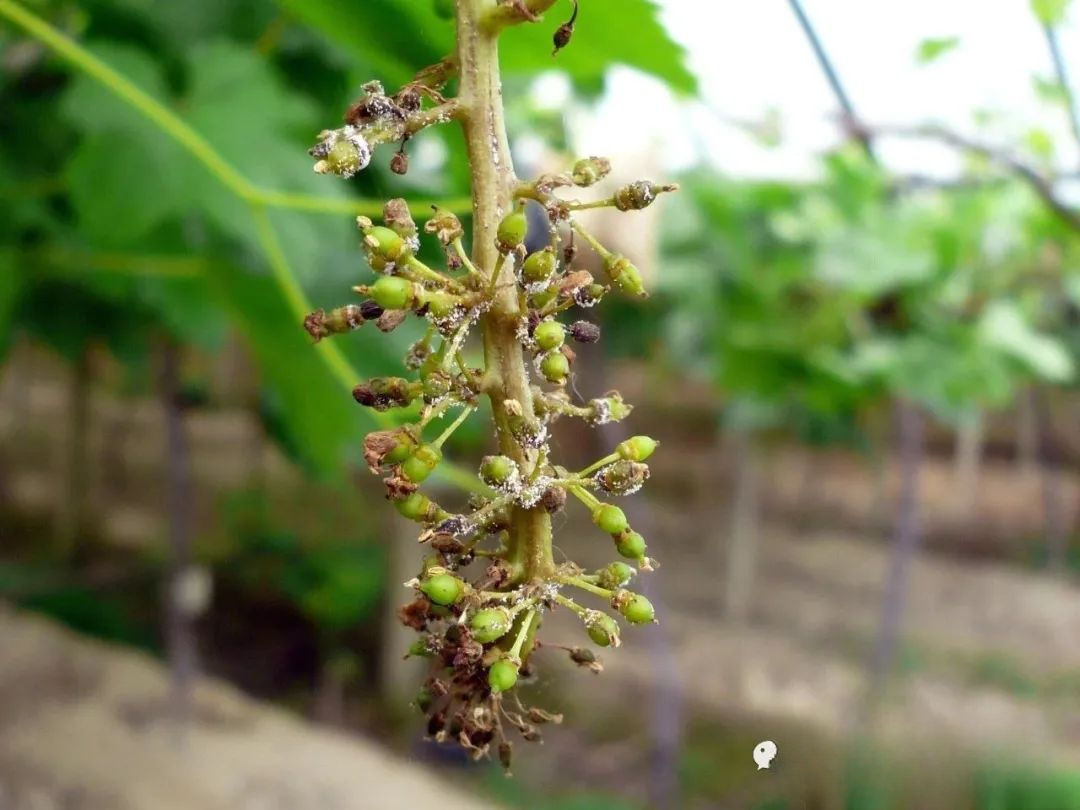
After flowering, grapevines are mainly affected by rachis rot and downy mildew, which damage the fruit stalks, stems, and berries. Powdery mildew, black rot, and gray mold affect the leaves, stems, and bunches. Meanwhile, green stink bugs, leafhoppers, scarab beetles, and spider mites can also damage branches, leaves, and bunches. These problems cause rachis rot, moldy fruit stalks, blackening and drying of berries, and fruit drop, or wounds and mottling caused by insect infestations, impacting yield, quality, and profitability. Therefore, pest and disease control after flowering is crucial.
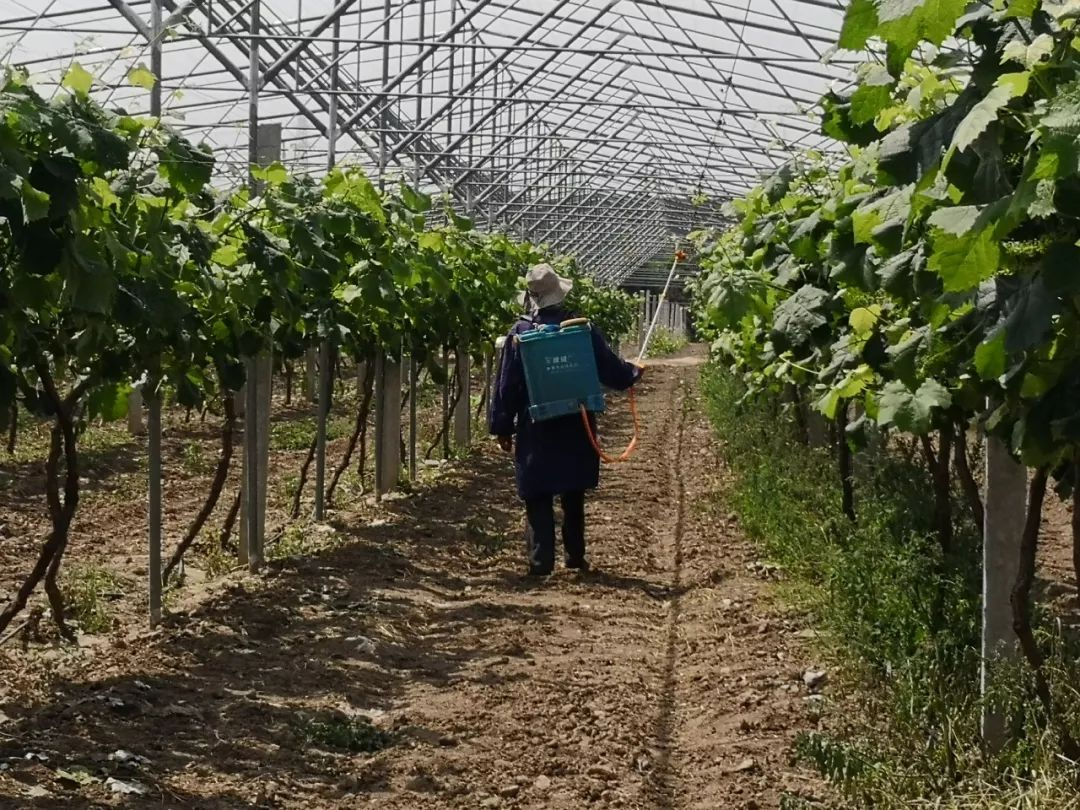
After the flowers have fallen, the following should be noted in agricultural operations :1. Adjust the temperature inside the greenhouse appropriately, keeping it at 26-28 ℃ during the day and 14-16℃ at night, and control the relative humidity at 60-70% to reduce the damage caused by pests and diseases.2. Timely cultivation and loosening of the soil can increase soil temperature, promote root growth and nutrient absorption, cultivate strong trees, and improve the tree's disease resistance.3. Ventilate in a timely manner to reduce humidity inside the greenhouse and create an environment unfavorable to the occurrence of diseases.4. Upon discovering diseases, promptly remove diseased branches, leaves, and ears of grain, and take them out of the orchard for centralized disposal and destruction.5. Use chemical control methods to reduce the damage caused by pests and diseases.The first application of pesticides after flower fall should be done when 80% of the flowers have fallen. A mixture of protectants and treatments is more effective. It is recommended to use a spray consisting of 40% fludioxonil (3000x dilution) , 35% pyraclostrobin (1500x dilution) , 40 % dimethomorph ( 1000x dilution) , 15 % chlorpyrifos ( 1000x dilution), and zinc (1000x dilution) evenly.After a 10-15 day interval between the first and second applications , use eradication agents as the primary treatment . Spray with a mixture of 45% azoxystrobin at 1500x dilution , 40% fludioxonil at 3000x dilution , 48% dimethomorph at 1500x dilution , 35 % thifluzamide at 2000x dilution , 5% abamectin at 3000x dilution , and chelated calcium at 1000x dilution. In orchards with powdery mildew, replace the 45% azoxystrobin with 30% azoxystrobin at 1000x dilution for spraying .After flowering and during the young fruit stage, special attention must be paid to the following when applying pesticides :1. Do not use if the greenhouse temperature is above 30 ℃. Avoid spraying pesticides at high temperatures.2. When spraying, spray from bottom to top, onto the back of the leaves, ensuring even and thorough coverage without dripping.3. The spraying machine should have good atomization, sufficient pressure, small nozzle, and meticulous application of pesticides.Adhering to the eight-character principle of " prevention first, comprehensive control ", using the right medicines at critical times, and treating the symptoms accordingly, we can achieve the ideal effect of reasonable input and high-efficiency output by scientifically controlling pests and diseases.