Amazing magic tricks revealed – simple and easy to learn!

Methods/Steps
Magic that can make gravity disappear
Take a box of matches (don't fill it too full) and shorten one match slightly (about the width of the matchbox). Place this shortened match horizontally in the matchbox, preventing the other matches from falling out.
Now, the preparation is complete. Show the matchbox to someone, but don't show the horizontally placed match. Then, mark an area on the table and say, "I'm going to make gravity disappear in this area." Next, turn the matchbox face down and pull it out. The match won't fall out. But slowly move the match to another area. At this point, simply pinch the front and back of the matchbox gently, and the match will fall out naturally.
2. Turning Banknotes into Blank Paper
: Preparation: 10 banknotes, about 10 sheets of blank paper.
Performance Method: The performer first places a strip of blank paper between the 9th and 10th banknotes. At the start of the performance, the performer unfolds the 10 banknotes into a fan shape and holds them in their hand. Then, they pull out a few banknotes from the fan shape, showing both sides, and then move the 10 banknotes to the bottom, where a stack of blank paper is placed. Next, they straighten the stack of banknotes, strike it with their right fist, and then unfold the fan shape again. Strangely! The original stack of banknotes has all turned into blank paper. They then pretend to pull out a few more sheets of paper, using these to cover the banknotes, making it appear as if the banknotes have all turned into blank paper.
Note: The banknotes and blank paper used in the performance should be new and crisp.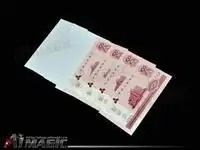
For this mind magic trick
, prepare two books of the same type (e.g., business or education). Have two audience members come up and examine the books. One audience member randomly turns to a page, and the magician asks them if they want either the left or right page. The other audience member turns to the page number the first audience member mentioned and remembers the first word. The magician then writes that word down.
The secret: The contents of the two books are identical; the magician has simply switched the covers. When the magician asks the first audience member if they want the left or right page, the magician can simply and openly reveal the first word. The audience member then performs some mysterious actions while guessing the word. Note: The two books must be of the same type.
Coin Through the Throat:
The magician prepares a coin for the audience to examine and mark. He then says he's going to eat the coin and pass it back down the back of his neck. He puts the coin in his mouth, and the audience sees his hand is empty. Then he takes it out from behind his neck.
The trick: The magician is actually saying, "I'm going to put it in my mouth and take it out from behind my neck," and he's already put it behind his neck. But he still pretends to hold the coin. Next, he acts like he's swallowing and is in pain. The longer this part is, the better, so the audience forgets what he just did. Then he takes the coin out from behind his neck.
The " Flying Cards "
Phenomenon:
The magician holds two cards in his left hand, showing them to the audience once to demonstrate that there are only two cards. He then gathers the cards together, holds them up to his eyes, blows on them, and says, "Cards fly, cards fly!" He then spreads the cards out, and now he has seven cards.
He gathers the cards again, says "Spread the cards out," and there are only two cards left.
This repeated performance is endlessly entertaining.
Performance Technique:
Behind the two cards in the magician's hand, five angled cards are glued on (as shown in Figure 2). When the magician displays the cards, the cards with the angled edges are held face down. When gathering the cards and blowing on them, he secretly turns the cards around. When he spreads them out again, it appears to be seven cards (actually two cards and five angled edges). Because the audience is far away, they cannot see the angled edges and perceive the cards as flying. When gathering the cards again, the magician simply turns them around and spreads them out, and the extra cards "fly" away again.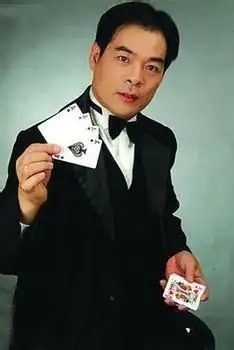
Mathematical Card Guessing
Demonstration:
The performer hands a deck of cards to the audience, then turns away and asks the audience to perform the following instructions:
1. Place three piles of cards on the table, each pile containing the same number of cards (let's say 15 cards each), but don't tell the performer.
2. Take 4 cards from the second pile and put them into the first pile.
3. Take 8 cards from the third pile and put them into the first pile.
4. Count how many cards are left in the second pile (in this example, 11 cards), and take the same number of cards from the first pile and put them into the third pile.
5. Take 5 cards from the second pile and put them into the first pile.
The performer turns around and says, "Remove the second and third piles. Now there are 21 cards left in the first pile, right?" The audience counts and confirms there are indeed 21 cards left.
Secret:
This magic trick utilizes the mathematical principle of identity transformation. It's crucial to remember: the initial number of cards in each pile must be equal. The second step is to remove the same number of cards from the first pile as from the second pile. In this example, the mathematical expression is 4*2 + 8 + 5 = 21.
Comments and suggestions:
This is a magic trick performed entirely based on mathematical principles. The audience member in this trick is likely to be relatively "obedient." If they don't follow your instructions completely, your final trick will fail. However, the most deceptive aspect of this trick is that the audience member completely controls the cards. Furthermore, it is highly interactive. Of course, not all audience members are this "obedient," and to deal with them, you'll need to use some "forced card" tricks.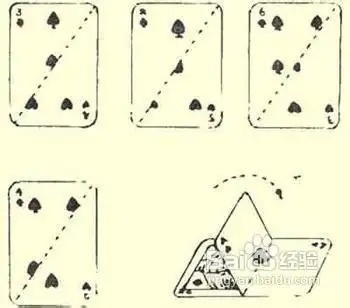
The "Changing Colors"
Magic Trick:
The performer stacks cards, unfolding them in a fan shape to show the audience that there are red and black cards, and also reveals the reverse side. The performer then draws a few cards to show the audience the front and back sides. Next, the performer gathers the stack, waves it up and down a few times, and when it unfolds again, all the cards have turned black.
Magic Secrets:
1. Take about 10 red and black cards for the performance;
2. Tear some black cards in half vertically. Then tear all the red cards in half in the same way, and glue the torn halves together to create two-color cards;
3. Stack the specially treated cards, spaced apart. During the performance, when the cards are fanned out, there are naturally red and black cards; after waving the hand, the cards are flipped over and unfolded again, all turning black;
4. Remember, any cards drawn and shown to the audience must be untouched black cards.
Five cards are randomly selected from a bag
, face down, and placed side by side on the table. The performer stands with their back to the audience member, who silently counts one card from right to left, noting its number and remembering its name. The performer gathers the five cards and puts them into a bag. Then, leaving one card in the bag, the performer takes out four cards and places them face down on the table. The performer then asks the audience member which card they identified. After the audience member answers, the performer says, "I already kept that card in the bag." They then take it out and place it face up on the table—the card the audience member identified.
Performance Method:
1. Before the performance, four other cards are pre-placed in a bag.
2. When the performer collects the five cards from the table, they must collect them in order from right to left (Figure 1).
3. After placing the five cards into the bag containing the four cards, the performer takes out the four other cards previously hidden in the bag and places them face down on the table (the audience member mistakenly believes these are the four cards from the five).
4. Then the performer secretly counts the number of cards the audience member calls out from the bag, pulls out that card, and shows it to the audience member; this is the audience member's chosen card.
5. There are still five cards on the table and four cards in the bag, allowing for multiple repetitions without giving anything away.
A piece of paper and a pencil are on the table. The performer walks to the table, turns their pocket inside out to show the audience that it's empty, then turns it back inside. The performer picks up the pencil and writes a number on the paper (without letting the audience see), then puts the paper in their pocket. The performer says to the audience member, "Now say any number. I've already predicted it and written it on this piece of paper. Okay, now think of any number and say it." After the audience member says a number, the performer takes the paper out of their pocket and shows the audience the number written on it; it is indeed the number the audience member said. How is this possible? Can the performer really predict the future?
Here's how it works:
The performer places a pencil lead about 1 cm long on the corner of the table beforehand (it's small enough that the audience won't notice). Of course, you can hide the pencil lead anywhere else you like. When the performer picks up the pencil and writes a number on a piece of paper, they should pretend to be writing, but actually not. After "writing," they put the paper in their pocket. When the audience member calls out a number, the performer secretly picks up the pencil lead from the table. Then, they reach into their pocket and quickly write the number called out by the audience member on the paper with the pencil lead (to make it easier to write, the audience member can limit the numbers they call out to between 0 and 9). At this point, the performer takes out the paper and shows it to the audience (the performer can throw away the pencil lead while the audience member is looking at the paper). The audience will definitely find it incredible. That's a really cool little magic trick!