A comprehensive guide to the prevention and control of common peach tree pests and diseases, including peach aphids, scale insects, and peach fruit moths.
Peach trees are a widely planted economic crop, and the occurrence of pests and diseases varies depending on the local climate. This article will provide a systematic and comprehensive solution to the pests and diseases that may occur in peach tree cultivation at this stage. Peach farmers are encouraged to refer to this article based on their own specific circumstances.
I. Pests
The main pests of peach trees are peach aphids, scale insects, and peach fruit moths. In some areas, there are also miscellaneous insects such as green mirid bugs and fruit flies. Overall, the incidence of these pests is less severe in the south and more severe in the north. I will discuss them one by one below.
1. Peach aphid
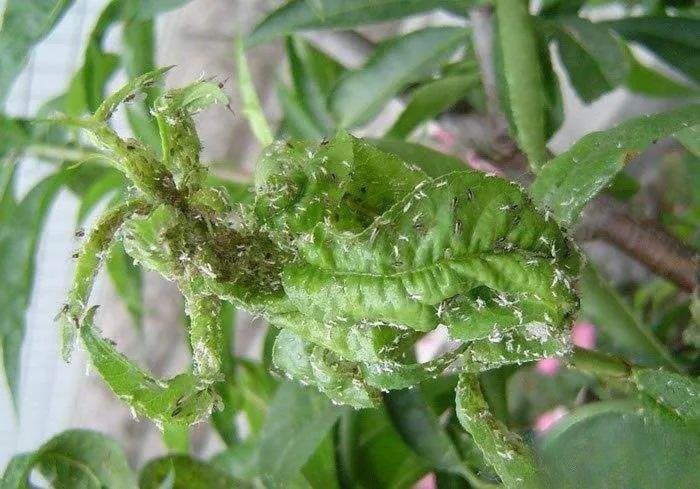
The peach aphid is a piercing-sucking pest that occurs in peach tree cultivation in both northern and southern regions. It can break out when the temperature is below 30 degrees Celsius. It mainly damages the tender shoots, leaves, and young fruits of peaches, causing leaves to curl and fruits to become deformed.
The main challenge in controlling peach aphids lies in the fact that aphids cause leaf curling and secrete honeydew, making it difficult for general insecticides to directly target the insects, thus greatly increasing the difficulty of control. Therefore, the main products for controlling peach aphids are systemic insecticides.
Prevention is key. The first critical period for peach aphid prevention is before flower bud break in early spring. Spraying the entire tree with lime sulfur solution at 5 Baume degrees can effectively prevent various insect diseases. Alternatively, if possible, spraying the entire tree with lime sulfur solution at 4 Baume degrees after leaf fall in winter (when temperatures are above 5℃) is also effective. Tying corrugated paper or straw mats to the tree before leaf fall in winter and removing and burning them before flower bud break in spring can also effectively reduce the aphid population the following year.
The second critical period for peach aphid prevention is from when 20-30% of the flowers have opened until they are fully open. After flowering, use a mixture of 25% imidacloprid at 700 times dilution and 30% thiamethoxam at 2500 times dilution for control. At this stage, overwintering eggs have just hatched, the insect population in the orchard is low, and there is no honeydew. Aphids are mostly concentrated on leaf buds, flower buds, and the roots of tree shoots, making control easier. If the highest temperature in southern orchards exceeds 20℃ during this period, 50% pymetrozine at 4000-5000 times dilution can be used instead of thiamethoxam for better results.
The third critical period is from 70% flower fall to the unfolding of new leaves. At this time, the leaves have unfolded, and systemic insecticides can exert their full effect. It is recommended to use spirotetramat-based products, such as 22.4% spirotetrazine at 4000-5000 times dilution + 30% thiamethoxam at 2500 times dilution, or 25% imidacloprid at 700 times dilution, or 50% pymetrozine at 4000-5000 times dilution. If the cost is acceptable, the latter three neonicotinoid insecticides can also be combined in pairs. If you want to control scale insects as well or want a longer-lasting effect, you can add pyriproxyfen. For example, a 3000-fold dilution of 24% spirotetramat and pyriproxyfen (produced by Chengdu Kelilong, trade name: Cassia tora) plus a neonicotinoid insecticide (see above). If aphids do not subsequently appear, a second application of Cassia tora/acre + pymetrozine/acetamiprid should be made 30-40 days later. This should significantly reduce the likelihood of an aphid outbreak this year.
Next is treatment.
If prevention is too late, aphids have already appeared, or the weather is suitable for an aphid outbreak and the infestation is severe, the following treatment plan can be considered:
During periods of low temperature, when the highest temperature remains or is mostly below 25°C or even 20°C, imidacloprid and thiamethoxam, which are effective at low temperatures, and carbamates such as methomyl and isoprocarb are the main formulations used. Several formulations are provided here for reference.
For minor occurrences, use 30% thiamethoxam at 2500x dilution + 50% pymetrozine at 4000-5000x dilution + orange peel essential oil at 2500x dilution.
In case of severe outbreaks, use 50% pymetrozine at a dilution of 2000-2500 times + orange peel essential oil at a dilution of 2500 times + 20% methomyl at a dilution of 1000 times.
Other options include 20% thiamethoxam (2500x dilution), 25% imidacloprid (700x dilution), 10% acetamiprid (2500x dilution), and 20% isoprocarb (1000x dilution).
During periods of high temperature, when the maximum temperature generally exceeds 25°C, pymetrozine or acetamiprid should be the primary choice, supplemented with thiamethoxam or thiamethoxam. Methomyl is not recommended at this time, as it may cause phytotoxicity to both humans and peach trees. A suggested treatment regimen is as follows:
50% pymetrozine 2000-2500x dilution /20% acetamiprid 1000x dilution + 30% thiamethoxam 2500x dilution + orange peel essential oil 2500x dilution.
In addition, 22% flonicamid (Tefuli) at a dilution of 5000 times and 50% flonicamid (7000-8000 times dilution) are also effective pesticides for treating aphids. They can be combined with neonicotinoids for outstanding results, but they are expensive, and resistance varies from place to place, so this is only a suggestion.
There are also a few experimental methods, such as drenching the roots with acephate or spraying with high-concentration orange peel essential oil for physical pest control, and spraying with the old pesticide dichlorvos, etc. These are not mainstream methods, and you can try them on a small scale and refer to them accordingly.
2. Scale insects
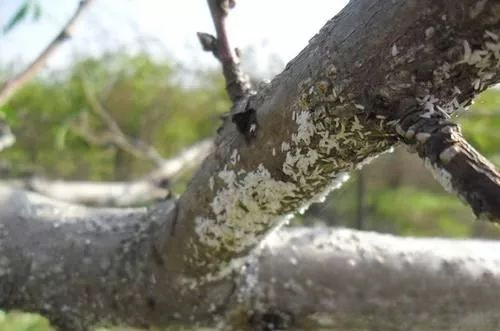
Peach tree scale insects are mainly mulberry scale insects, which can break out in both northern and southern regions. These pests suck sap from branches, causing poor branch development and even wilting. The main difficulty in control lies in coating the insects with a white waxy layer, effectively preventing contact between insecticides and the insects. Traditional control of scale insects mainly uses chlorpyrifos, but since its ban in 2015, it is difficult to find qualified chlorpyrifos on the market; most are counterfeit products secretly produced by small factories. In the past two years, prevention has mainly focused on spirotetramat and pyriproxyfen, especially pyriproxyfen, which is considered a highly effective pesticide against scale insects. Treatment mainly uses chlorpyrifos and thiamethoxam, as well as combinations of both.
Prevention: Scale insect prevention and peach aphid prevention are actually integrated. Before flowering, lime sulfur or mineral oil are mainly used; after leaf expansion, spirotetramat and pyriproxyfen are mainly used. Prevention and treatment plans are given below for reference.
For prevention of
peach aphids, use a mixture of 24% spirotetramat/pyriproxyfen (3000x dilution) and orange peel essential oil (2500x dilution). For peach aphid control, add to the pesticide.
Treatment
with 42% chlorpyrifos thiamethoxam at a dilution of 1000 times + orange peel essential oil at a dilution of 2500 times.
30% chlorpyrifos-thiamethoxam at 700-800 times dilution + orange peel essential oil at 2500 times dilution.
For orchards with a large scale insect outbreak, it is recommended to use both treatment and prevention methods simultaneously.
3. Peach fruit moth:
The peach fruit moth is prevalent in the Huang-Huai-Hai region. In its early stages, it damages young shoots, causing shoot breakage. As the peach fruit nears maturity, it burrows into the fruit and feeds. The difficulty in controlling the peach fruit moth lies in its boring nature; whether in young shoots or inside the fruit flesh, general insecticides are difficult to reach. Therefore, control mainly relies on products with good systemic properties. In areas with mild infestations, abamectin, cypermethrin, chlorpyrifos, and various urea insecticides are the main treatments. In severely infested areas, multiple or even triple combinations are necessary. For specific control methods, please refer to the author's previous article on pear fruit moth control. Here's another simple and direct method: after discovering shoot breakage, spray the entire orchard with 45% chlorpyrifos (Lorsban) at a dilution of 800-1000 times. Apply once every 15 days during the fruit enlargement period, and increase the dilution during the color-changing period, essentially spraying from beginning to end. This method is only suitable for peach varieties with low pesticide residue requirements and low requirements for fruit surface smoothness. For nectarine or flat peach varieties, use emulsifiable concentrates of insecticides with caution, especially highly toxic insecticides like chlorpyrifos, as there is a risk of phytotoxicity and impaired coloring. A similar formula is abamectin + flufenoxuron + pyrethroid; if you are unsure which to use, you can refer to this formula.
As for pests found in peach orchards such as green stink bugs (mainly damaging young fruit, causing deformities) and fruit flies (mainly damaging mature fruit), these are mainly controlled with various pyrethroids. If found, you can combine pyrethroids for control.
Snail control in peach orchards mainly uses metaldehyde and carbaryl.
For the prevention of peach blossom white spider mites, 30% etoxazole at 4000-5000 times dilution or 34% spirodiclofen at 2500 times dilution can be used; for treatment, 43% bifenazate at 3000-4000 times dilution plus orange peel essential oil at 2500 times dilution can be used.
The actual dosage of these insecticide formulations should be considered in light of local resistance levels. For example, in some northern regions where peach blossom infestation is relatively mild, cypermethrin or abamectin may be effective, but in central regions where resistance to these agents is very high, the same methods cannot be used. Please refer to this information accordingly.
II. Diseases:
The diseases affecting peach trees differ significantly between the north and south, mainly due to local rainfall and temperature conditions, showing a trend of more severe diseases in the south and less severe in the north. In the north, fungal diseases such as gray mold, white rot, and peach scab, commonly known as gray hair and white hair, are predominant, while in the south, bacterial leaf spot is the main problem. Some peach orchards exhibit a combination of bacterial and fungal diseases.
1. Fungal Diseases
of Peach: The main fungal diseases affecting peaches are controlled with four types of products: thiophanate-methyl, mancozeb, difenoconazole, and pyraclostrobin. For hairy peach varieties , a cost-effective control strategy is to use 70% thiophanate-methyl or carbendazim at a dilution of 1000 times during flowering, and 80% mancozeb at a dilution of 500 times after flowering. In the mid-stage, 25% pyraclostrobin at a dilution of 2500 times can be used alternately. In the later stages, difenoconazole, carbendazim, and azoxystrobin are the primary fungicides. This is because both pyraclostrobin and triazole fungicides like tebuconazole can affect coloring, so their use should be avoided as much as possible one month before harvest. For nectarine and flat peach varieties, powdered and emulsifiable concentrate products should be avoided. Because these peaches have an early harvest and require high fruit color, difenoconazole and azoxystrobin are the main treatments. A commonly used formulation is 32.5% benzoyl pyraclostrobin at a dilution of 2500 times. Additionally, tebuconazole, a new triazole fungicide, has good systemic properties, is fruit-friendly, and has high activity; it can be used alternately. Other commonly used fungicides include azoxystrobin, tetraflufenicol, carbendazim suspension, thiamethoxam zinc, and pyraclostrobin-mancozeb, all of which are fruit-friendly and can be used alternately.
2. Bacterial Diseases:
Bacterial diseases of peach trees mainly refer to bacterial leaf spot. In years with abundant rainfall, bacterial leaf spot is the most troublesome disease in southern peach orchards. It mainly damages leaves and fruit, causing leaf holes and spots on the surface of peaches, greatly reducing the marketability of the peaches. Previously, the main products for controlling leaf spot were tebuconazole and agricultural streptomycin, but both of these products have been banned, and it is currently difficult to find qualified products on the market. Currently, the mainstream products are divided into several categories, namely antibiotics such as kasugamycin, kasugamycin, and tetramycin; organic copper such as thiamethoxam and quinoline copper; organic zinc such as thiazolium zinc; biomimetic such as allicin and thiamethoxam; and inorganic such as octenamine acetate and chlorobromoisocyanuric acid.
Preventative options include: Kasugamycin, Cymoxanil acetate, organocopper compounds, and organozinc compounds.
Treatment options include: kasugamycin, tetracycline, allicin, organic copper, and chlorobromoisocyanuric acid (do not mix with products containing phosphorus, inorganic copper, or inorganic zinc).
In years with low rainfall, the above products can be applied individually, with an interval of 10-15 days between applications to the entire orchard. In years with high rainfall, treatment plus protection is necessary, with an application to the entire orchard every 7-10 days.
Several points need attention: First, bacterial diseases are mainly related to orchard humidity. During an outbreak, within safe dosage limits, appropriately increase the pesticide concentration, reduce the amount of water sprayed, use a better atomizing nozzle, and add 2500 times diluted orange peel essential oil to improve control efficiency. Second, peaches are sensitive to inorganic copper and some organic copper. Besides the organic copper listed above, other copper preparations must be tested before use. Third, for orchards with frequent bacterial diseases, it is recommended to apply cymoxanil acetate again during the bud break period for orchard sanitation. Lime sulfur sanitation is also essential.
Additionally, it's important to note that some orchards experience a combination of bacterial and fungal infections in leaf spot. If bacterial agents alone are ineffective, it's recommended to combine them with fungicides such as thiophanate-methyl or mancozeb.
3. Physiological Diseases (Nutrient Deficiencies):
Physiological diseases in peach trees are primarily caused by soil problems. Because peach trees are shallow-rooted, soil issues are particularly pronounced compared to other crops. Examples include root burn caused by uncomposted farmyard manure, soil compaction and nutrient deficiencies due to excessive use of compound fertilizers, and gummosis caused by excessive nitrogen fertilizer application. The fundamental solution is to apply more organic fertilizer, micronutrient fertilizer, and microbial fertilizer, which is another topic and will not be discussed here. The following mainly discusses alleviating the symptoms of micronutrient deficiencies.
Iron deficiency: Iron deficiency is a common disease of peach trees, mainly manifested as yellowing of new leaves. The main treatment is chelated iron, which is mainly achieved by foliar spraying of EDTA-Fe and EDDHA-Fe. Both root irrigation and foliar spraying are acceptable.
Calcium deficiency: Calcium is a crucial quality element for peaches, especially nectarines and flat peaches. Calcium deficiency can cause fruit cracking and poor surface gloss. Currently, chelated calcium fertilizers are mainly used. It is recommended to apply sugar alcohol calcium every other day from the young fruit stage, which can significantly increase individual fruit weight and brighten the fruit color. However, these products are also the most problematic, with many genuine and fake calcium fertilizers claiming to be imported. My personal suggestion is, if possible, to use calcium fertilizers from Bayer, Yaran, and Elf. If not, you can choose organic calcium products from leading domestic manufacturers such as Shangge, Yanhua, Noposion, and Hailier; the effects are roughly the same. As for other calcium fertilizers claiming to be imported, although some are genuine, there are too many counterfeit products. If you are not familiar with the product, it is advisable to ignore it.
Boron deficiency: Boron is also a very important micronutrient for peaches. Boron deficiency can lead to poor fruit set, fruit shrinkage, deformed fruit, and corky fruit. However, excessive boron can cause boron poisoning. It is recommended to supplement boron once during the flowering period and once during the young fruit stage. Currently, the mainstream boron supplements are mainly borates (borax), or products that supplement both boron and calcium can be selected. Supplementing boron and calcium together can promote absorption and is a more recommended approach.