20 fun and surprising science facts that will change your perception of life!
What you think you know about life is just the tip of the iceberg. Hidden in the gaps of everyday life are 20 little-known facts that will surprise you.
The following 20 fun and little-known science facts will change your perception of life!
(1) A refrigerator is not a "safe box" for food.
Low temperatures only make bacteria "lie dormant," but they don't kill them! For example, Listeria can still survive at -20°C, so pregnant women and children should be especially careful with unheated refrigerated foods.
Fun fact: Storing bananas, honey, chocolate, and other foods in the refrigerator can actually accelerate spoilage!
(2) Is glass really a “flowing liquid”?
The "thin at the top and thick at the bottom" stained glass windows of medieval churches was once mistakenly interpreted as the glass flowing slowly. In reality, glass is an amorphous solid, with molecules arranged randomly yet retaining solid properties. The unevenness of those windows was simply a result of the crude craftsmanship of ancient times!
(3) Why do headphone cords always get tangled? Physics: The blame lies with "entropy"!
According to the law of entropy increase, a system will spontaneously tend towards chaos. When you throw your headphone cord into your bag, every movement accelerates its "race towards chaotic freedom." Solution: Use a cord winder to secure it, or simply replace your headphones with Bluetooth ones!

(4) The truth about microwave heating: Food is heated by "vibration"!
Microwaves are electromagnetic waves with a frequency of 2.45 GHz, causing water molecules to vibrate 2.45 billion times per second, generating heat through friction. Therefore: when heating dry steamed buns, wrap them in damp paper towels (they cannot be heated without water molecules); metal containers can reflect microwaves and cause an explosion (remember: metal and microwave ovens are mortal enemies!).
(5) The water droplets on the outside of the chilled beverage bottle are not "leaking"?
In fact, the appearance of these tiny water droplets is not a quality issue with the beverage bottle, but rather a common physical phenomenon—liquefaction. The air around us always contains a certain amount of water vapor.
When a cold beverage bottle is exposed to room temperature air, the air around the bottle cools down rapidly. In this low-temperature environment, the molecular thermal motion of water vapor slows down, the distance between molecules decreases, and the gaseous water vapor gradually transforms into liquid water, adhering to the outer wall of the bottle and forming the water droplets we see. This is similar to dew condensing on the grass in the early morning; both are caused by the condensation of water vapor in the air due to the drop in temperature.

(6) Do plants compete with you for oxygen at night?
Plants do indeed respire at night, just like humans, inhaling oxygen and exhaling carbon dioxide. However, this doesn't mean they necessarily "compete" with us for oxygen. In normal living environments, the number of plants is relatively limited, and the amount of oxygen consumed by their respiration is negligible.
Taking the common indoor plant, pothos, as an example, the amount of oxygen consumed per hour by the respiration of one square meter of pothos leaf area is approximately 0.001 grams. Such consumption has a negligible impact on the oxygen content of indoor air. Moreover, modern buildings have relatively open spaces and good air circulation, and indoor air is constantly exchanging with fresh outside air, further diluting the impact of the plant's nighttime respiration on oxygen content.
Therefore, there is no need to worry that plants will compete with us for oxygen at night. More often than not, they are our good helpers in purifying the air and beautifying the environment, continuously providing us with fresh oxygen during the day and adding vitality to our lives.
(7) In winter, static electricity is so high that it makes your hair stand on end?
In the cold, dry winter, we often encounter the problem of static electricity, and even our hair may become frizzy due to static electricity. This is mainly because the air humidity is low in winter, and the air's ability to conduct electricity is weakened.
When we rub our clothes together, such as sweaters or synthetic fabrics, electrical charges tend to accumulate on the surface and are difficult to conduct away through the air, thus generating static electricity. For example, when taking off a sweater, you hear a crackling sound, which is the sound of static discharge. Hair is a lightweight material, and when strands of hair with static electricity repel each other due to the mutual repulsion of like charges, the interesting scene of "frizzy" hair appears, shattering our everyday perception of smooth hair.
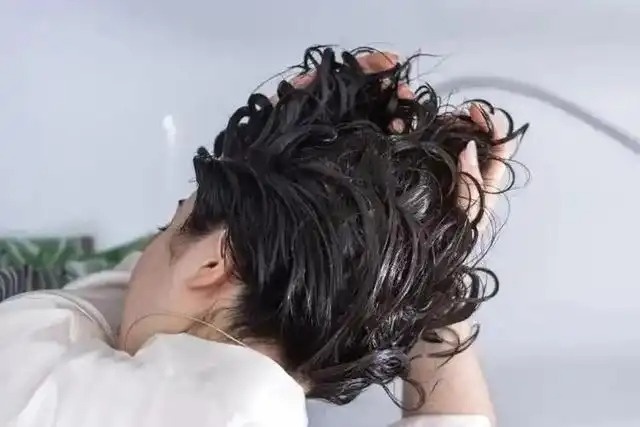
(8) Is wet hair more prone to breakage?
Many people may not realize that wet hair is actually more prone to breakage than dry hair. The main component of hair is keratin. When hair is wet, moisture penetrates into the hair shaft, causing the keratin fibers to swell.
At this time, the hair structure becomes relatively loose, and its strength and elasticity decrease. When we comb or inadvertently pull wet hair, it is more prone to breakage because its ability to resist external forces is weakened.
Therefore, after washing your hair, try to gently pat it dry with a soft towel to remove excess water and reduce excessive handling of wet hair. This phenomenon reminds us to have a new understanding of the details of hair care.
(9) Eggs are easier to peel when they are put in cold water?
When boiling eggs, many people wonder whether it's easier to peel them by starting with cold or hot water. Actually, starting with cold water is more advantageous for peeling. When eggs are placed in cold water, as the water temperature slowly rises, the air inside the egg has enough time to escape due to thermal expansion and contraction.
Moreover, during the heating process, the coefficients of thermal expansion between the eggshell and the egg white are different. Gradually raising the temperature of cold water allows this difference to be more evenly manifested, creating tiny gaps between the egg white and the eggshell. This makes them easier to separate after cooking, and the eggshell can be easily and completely removed when peeling, overturning the traditional idea that boiling eggs in hot water makes them easier to peel.
(10) Applying toothpaste after a burn? You're giving bacteria a party.
Some people habitually apply toothpaste to relieve the pain after being burned. However, this practice is unscientific and may even have adverse consequences. Toothpaste itself does not treat burns. Applying toothpaste creates a relatively closed and moist environment on the burned area, which is very conducive to bacterial growth, like hosting a "party" for bacteria.
Furthermore, toothpaste may interfere with a doctor's assessment of the severity of a burn. The correct course of action after a burn is to immediately rinse the affected area with running cool water for 15 to 30 minutes to lower the temperature and reduce damage, and then seek medical attention as needed based on the extent of the burn.
(11) Why is blood red?
Blood's red color primarily originates from hemoglobin in red blood cells. Hemoglobin is rich in iron, and when it combines with oxygen, it forms oxyhemoglobin, a bright red substance. During blood circulation, arterial blood carries a large amount of oxygen, resulting in a high content of oxyhemoglobin and thus a bright red color; while venous blood, after oxygen is released from tissues and organs, shows a decrease in oxyhemoglobin and an increase in deoxyhemoglobin, making it a relatively darker red. In short, the state of binding and separation of hemoglobin with oxygen determines the different shades of red that blood exhibits.
(12) Why do children have to lose their baby teeth?
The replacement of baby teeth with permanent teeth is a normal physiological process in children's growth and development. Teeth used in childhood are called deciduous teeth (baby teeth). As children grow, their jawbones develop and enlarge, and the size and number of deciduous teeth can no longer meet the needs of chewing and oral cavity space. At the same time, permanent tooth germs gradually mature within the jawbone, erupting upwards and pushing out the deciduous teeth. Under the pressure of the erupting permanent teeth, the roots of the deciduous teeth are gradually absorbed and shortened, eventually causing the deciduous teeth to loosen and fall out, replaced by permanent teeth.
The process of losing baby teeth usually begins around age 6 and lasts until age 12-13. This process allows children to have permanent teeth that are more suitable for the size of their jawbone and are stronger and more durable, helping them to chew food better and promoting physical development.
(13) Why are everyone's fingerprints different?
The uniqueness of fingerprints stems from the complex process during embryonic development. Between 10 and 24 weeks of fetal development, the epidermal cells of the finger skin grow at different rates, resulting in the formation of many tiny bumps and depressions in the epidermis. These bumps and depressions combine to form the fingerprint pattern.
Fingerprint formation is influenced by both genetic and environmental factors. Even identical twins, who share the same genes, will have different fingerprints due to subtle environmental differences such as the pressure and position of the amniotic fluid their fingers came into contact with during fetal development. The uniqueness of fingerprints provides a reliable basis for identification and plays an important role in daily life and criminal investigation.
(14) Why do people need to sleep?
Sleep is vital to the human body, serving multiple physiological purposes. From a repair perspective, the body's metabolism slows down during sleep, entering a self-repair and adjustment phase. For example, cells renew and repair themselves, and the immune system is strengthened, helping to fight off disease.
In terms of brain health, sleep helps clear metabolic waste and consolidate memories. When we fall asleep, the connections between neurons are adjusted and optimized, allowing information learned and experienced during the day to be organized and stored, thus improving memory and learning ability. Furthermore, sleep regulates hormone levels; for example, growth hormone secretion increases during sleep, playing a crucial role in children's growth and development.
It can be said that sleep is a necessary link in maintaining normal physiological functions and physical and mental health, making us realize the importance of rest for life activities.
(15) Why do some children wet the bed?
Bedwetting in children, medically termed enuresis, has complex causes. From a physiological development perspective, children under 5 years old have underdeveloped bladder function, smaller bladder capacity, and weaker control over the urination reflex, making them prone to bedwetting. In addition, drinking too much water before bedtime, excessive excitement or fatigue during the day can also affect nighttime urination control.
Psychological factors should not be ignored either. Changes in environment and family pressure may cause children to be nervous, which may interfere with the normal nerve regulation of urination and lead to bedwetting.
As children grow older, their nervous system and bladder function gradually mature, and bedwetting naturally decreases. However, if bedwetting persists or becomes severe, it may be necessary to seek medical help to rule out other underlying medical conditions. This gives us a deeper understanding of the unique phenomena that occur during childhood development.

(16) Why do flowers come in various colors?
The various colors of flowers are mainly determined by pigments in the petals. Common pigments include anthocyanins and carotenoids. Anthocyanins exhibit different colors under different acidic or alkaline conditions; they appear red in acidic environments, purple in neutral environments, and blue in alkaline environments. For example, in hydrangeas, the pH of the soil affects the environment in which anthocyanins reside, thus altering the flower's color. Carotenoids, on the other hand, can give flowers yellow, orange, and red hues; the yellow and orange varieties of tulips are due to the presence of carotenoids.
In addition, the color of some flowers is also related to the structure of the petal cells. The refraction and scattering of light by the cells also make the flowers exhibit unique colors, satisfying the color preferences of different pollinators and promoting plant reproduction.
(17) Why do flowers have a fragrance?
The fragrance of flowers comes from oil cells in their petals, which secrete volatile aromatic oils. When a flower opens, these aromatic oils evaporate into the air along with moisture, allowing us to smell the fragrance. Different types of flowers secrete different aromatic oils, resulting in varying scents. For example, roses emit a sweet fragrance, while lavender has a unique, delicate, and refreshing aroma.
The fragrance of flowers exists primarily to attract pollinators such as insects. Insects can detect the fragrance of flowers with their keen sense of smell, thus finding the flowers and helping the plants complete pollination while collecting nectar, ensuring the plant's reproduction.
(18) Why do sunflowers turn with the sun?
The sunflower's ability to turn towards the sun is mainly related to the distribution of auxin. Auxin is found in the tip of the sunflower stem; this hormone promotes plant growth, but it also avoids sunlight.
When the sun shines on a sunflower, the auxin content on the shaded side of the stem tip increases, causing the cells on that side to elongate and grow faster, while the cells on the sun-facing side grow relatively slowly. This causes the stem to bend towards the light, making the sunflower's flower head face the sun. This phenomenon is particularly noticeable in the early stages of sunflower growth, helping it to better perform photosynthesis and obtain more energy for growth and development, showcasing the amazing characteristics plants exhibit in adapting to their environment.
(19) Why do tree rings indicate the age of a tree?
Annual rings are formed during the growth of trees. During the growing season, springtime is warm and rainy, and the cambium cells divide vigorously, producing large, thin-walled, and light-colored xylem cells, which are called earlywood. In autumn, as the temperature drops, cambium activity weakens, and the newly produced xylem cells are small, thick-walled, and dark-colored, which are called latewood.
The earlywood and latewood of the same year are clearly separated, forming a growth ring, or annual ring. Since trees undergo such a growth cycle every year, the age of a tree can be roughly determined by counting the number of annual rings on the cross-section of the trunk. Moreover, the width of the annual rings can reflect the environmental conditions during the tree's growth period. Wide annual rings indicate that the climate was suitable and the growing conditions were good that year, while narrow annual rings may indicate that the environment was relatively harsh. Let us interpret the historical information of a tree's growth through annual rings.
(20) Why are there still fibers connecting the lotus root even after it is broken?
The lotus root is actually the underground stem of the lotus flower. Within its structure, there are many vascular bundles that transport water and nutrients. The inner wall of these vascular bundles has a layer of tissue called the secondary wall, in which the spirally thickened, lignified parts form a spiral pattern.
When a lotus root is broken, the thickened spiral portion of the vascular bundle detaches, becoming spiral filaments. These filaments have a certain degree of elasticity and do not break easily, resulting in the phenomenon of "lotus root broken but filaments still connected." This is a structure that plants have evolved to ensure that their transport system can still maintain basic water and nutrient transport even when it is damaged to a certain extent, showcasing the ingenuity of plant physiological structure.