20 Amazing LittleKnown Facts (Scientifically Verified)
Nature and Biology
1. Polar bears have black skin.
Polar bears' seemingly white fur is actually hollow and transparent, refracting sunlight to appear white, while their black skin better absorbs heat. There are no polar bears in Antarctica because their evolutionary history is related to the glaciers of the Northern Hemisphere.
2. Octopuses have three hearts.
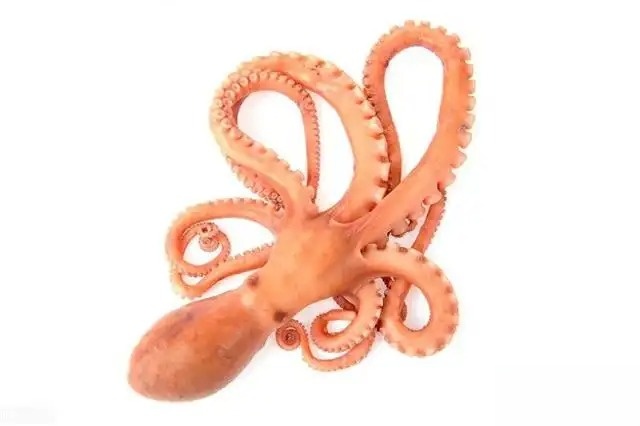
Two of the heart's organs are responsible for supplying blood to the gills, and one supplies the whole body. When an octopus swims, its main heart stops beating, so it prefers to crawl to conserve energy.
3. Wombat droppings are cube-shaped.
This Australian animal has a unique intestinal structure that forms angular feces through compression, which it uses to mark its territory and prevents the feces from rolling away.
4. Trees will 'scream'
When trees experience drought, the breaking of water within them produces ultrasonic vibrations, which act as a distress signal for the plant kingdom, but are inaudible to humans.
5. Bees can sense the Earth's magnetic field.
It contains magnetite particles that help with navigation and timekeeping, and can even transmit magnetic field information by adjusting the direction of its dance.
Human Body and Health
6. Human DNA shares 60% similarity with banana DNA.
The conserved genes responsible for basic cellular functions in the gene sequence highly overlap, but the regulatory genes differ greatly.
7. Saliva contains natural pain relievers.
The analgesic effect of 'opiorphin' in saliva is 6 times that of morphine, and there is scientific evidence to support the behavior of animals licking their wounds.
8. The gastric mucosa is completely renewed every 3 days.
In a highly acidic environment, gastric epithelial cells regenerate at an extremely high rate, which, if left uncontrolled, can lead to stomach cancer.
9. Humans are the only animals that shed tears because of emotions.
Emotional tears contain prolactin and leucine enkephalin, which may have a stress-relieving chemical effect.
10. Fingerprints can predict athletic talent.
Fingerprint formation is related to neural development during the embryonic period, and specific fingerprint patterns (such as whorls) are statistically associated with explosive power.
⏳ History and Culture Section
11. Ancient Romans used urine to clean their teeth.
Ammonia in urine has a bleaching effect, and this oral cleaning method was recorded in the 1st-century book "Natural History".
12. Napoleon was afraid of cats.
His ailurophobia made him feel uneasy whenever he saw a cat, yet he showed no fear of artillery fire on the battlefield.
13. High heels were originally designed for men.
Persian cavalry invented high-heeled boots to secure their stirrups, and in the 17th century, European nobles developed them into a symbol of status.
14. Shakespeare invented 1700+ new English words.
New words, including 'assassination' and 'bedroom,' are created through word class conversion and prefix recombination.
15. The meteorite dagger of Tutankhamun, the ancient Egyptian pharaoh.
X-ray fluorescence analysis in 2016 confirmed that the nickel-iron ratio of the burial dagger matched perfectly with that of meteorites from outside Egypt.
Animal Behavior
16. Crows plot 'revenge'.
Experiments have shown that captured crows can remember the researchers' faces and rally to attack their 'enemies' for up to six weeks.
17. Koala fingerprints are almost identical to human fingerprints.
Under an electron microscope, the patterns and details of a koala's fingerprints are so similar to those of a human that even experts find it difficult to distinguish them.
18. The penguin's knees are hidden under its feathers.
The short legs are a visual illusion; the knee joint is actually located inside the body, and the person stands in a kneeling position. The skeletal structure is highly similar to that of humans.
19. Giraffes only need 20 minutes of sleep per day.
Segmented sleep lasts no more than 5 minutes at a time, and sleeping standing up is the norm, while lying down makes one more vulnerable to attack.
20. The butterfly tastes the flavor with its feet.
Its foot chemosensors can detect plant chemicals, and it will only extend its mouthparts to feed when it comes into contact with a suitable host.
Selected Fun Facts
The above content has been cross-verified by academic papers and authoritative media:
- Cubic fecal studies (2018 issue of the journal Soft Matter)
- The magnetosensory mechanism of bees (Science, 2006)
- Compositional analysis of Tutankhamun's dagger (Meteoritics & Planetary Science, 2022)
- Ultrasonic monitoring of trees (2019 Cell sub-journal)
These little-known facts integrate discoveries from multiple fields such as biology, history, and materials science, and each one is backed by a scientific principle that challenges common sense.