10 LittleKnown Scientific Facts: You May Not Believe It, But They're All True
10 interesting and little-known scientific facts to help you understand the unknown world.
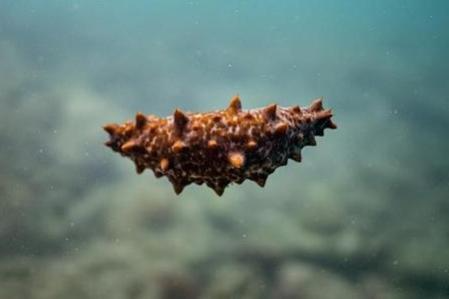
2. Sea cucumbers can "split into two" forms.
When encountering enemies, sea cucumbers can employ a unique "cloning technique," quickly ejecting their intestines, lungs, and body fluids to confuse the enemy, while their own bodies use the reaction force to escape to a more distant location to hide. However, sea cucumbers will not die as a result, thanks to their strong regenerative abilities.
3. A cow has four stomachs.
Cows have four stomachs. When cows eat grass, they don't chew it; they simply swallow it quickly. They temporarily store the grass in their rumen. The rumen doesn't digest food; instead, the food, moistened in the rumen, ferments with microorganisms under the influence of body temperature before being returned to the mouth for slow, thorough chewing. After chewing, the food is sent to the reticulum for initial digestion, then to the omasum for further digestion, and finally to the abomasum for complete digestion and absorption.
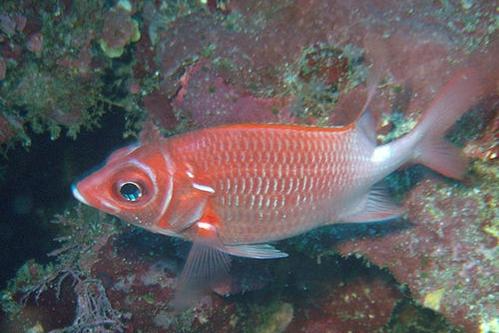
4. Why do dead fish lie belly up?
Because the upper part of a fish's body is heavier than its lower part, a dead fish will lie with its back facing down and its belly facing up.
5. Why is black soil more fertile?
Black soil is the most fertile because it contains abundant nutrients. Humus is a substance formed gradually by the decomposition of animal and plant remains and residues by bacteria, and it is rich in organic compounds. Because humus is gelatinous and black or brownish-black, a high content of this substance in the soil will stain it black.
6. Why build a subway?
Subways are an indispensable part of modern urban transportation. They are characterized by high speeds, frequent service, large passenger capacity, and convenience. In wartime, subways also serve as excellent air-raid shelters.
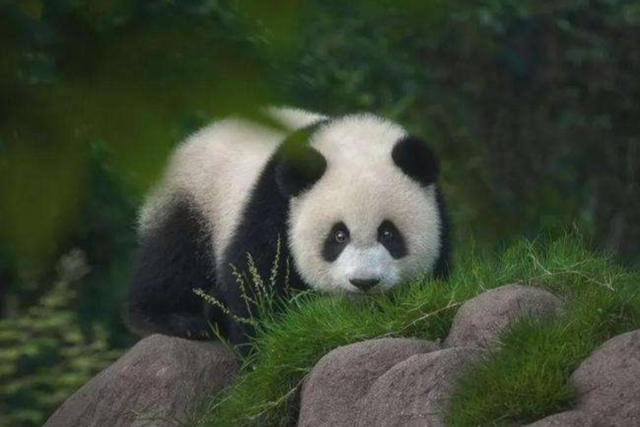
7. Whose offspring are giant pandas?
Giant pandas, bears, raccoons, and cats may have evolved from a common ancestor long ago, but diverged independently early in the evolutionary process. The ancestor of the giant panda is neither a bear nor a cat, but rather shares a common ancestor with both bears and cats.
8. Why does the mother cat always lick her kittens?
When kittens are first born, their mother cat licks them all over with her tongue. She licks their mouths especially hard to help them breathe, thus teaching them how to breathe. Her tongue also licks their wet fur dry, keeping them warm.
9. What did the ancestors of fish look like?
Both the armored fish and the wrasse are ancestors of fish, and they have plates protecting their bodies.
10. How do the stripes on zebras protect them?
Black and white absorb and reflect light to different degrees, which can disrupt the outline of a zebra's body, making its shape blurry and difficult to distinguish.